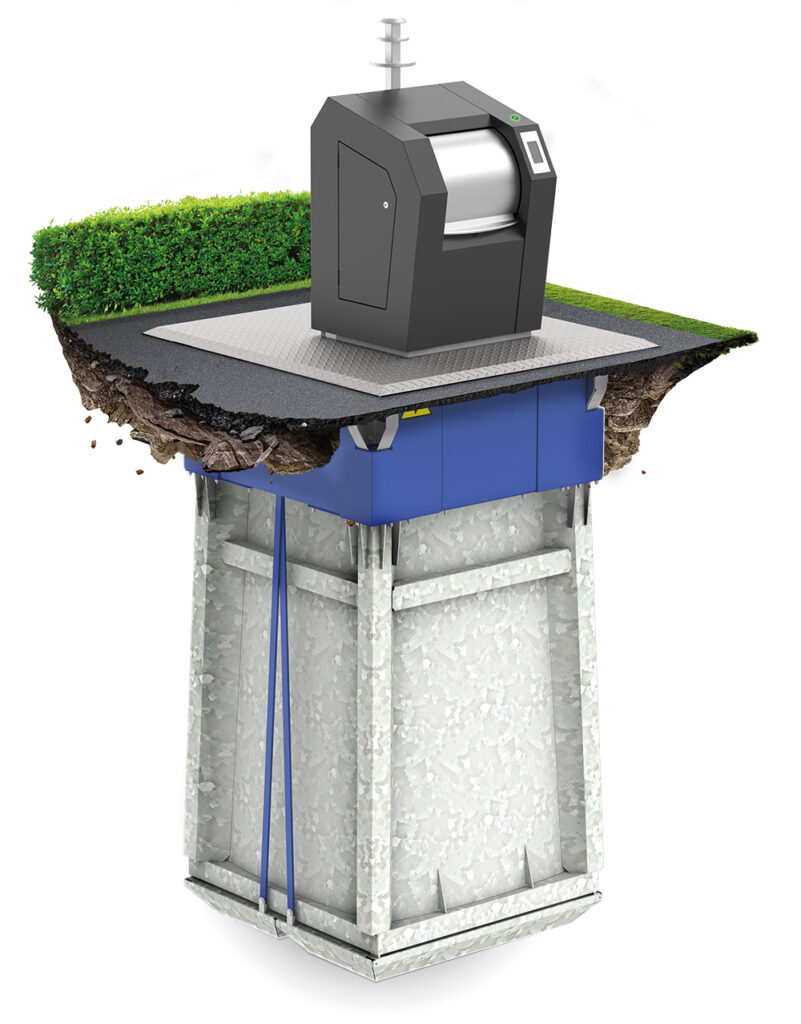
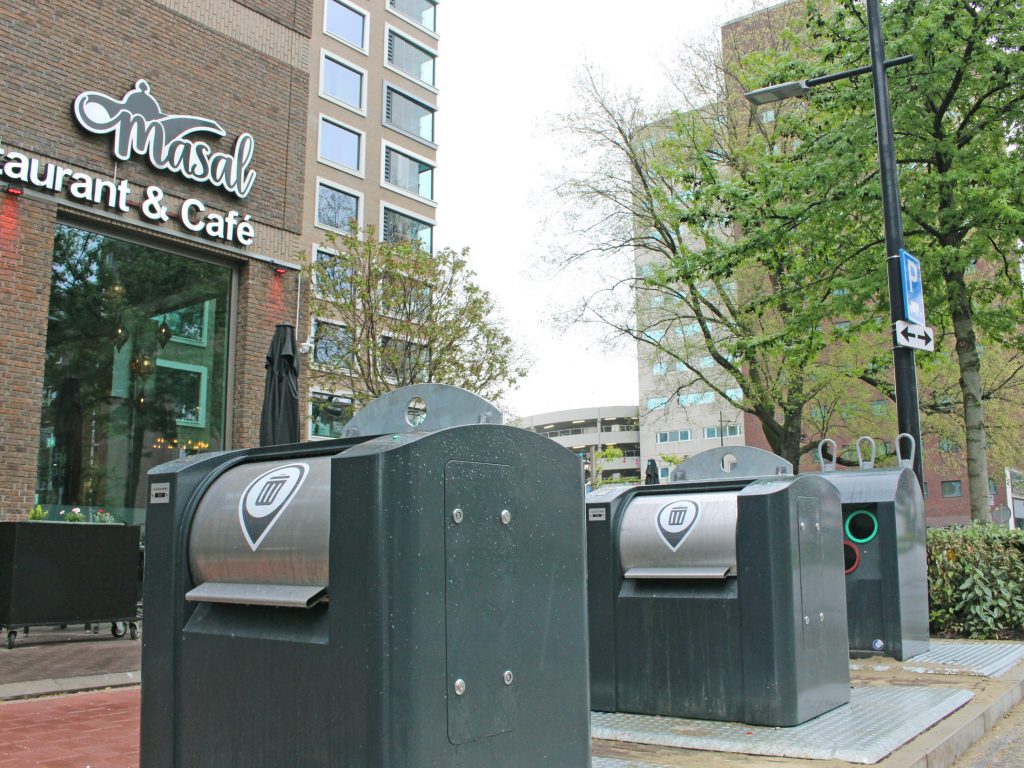
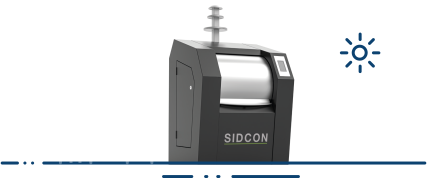
The Sidcon compactor uses a screw mechanism to press the air out of the waste. The screw transports the waste into the underground container. As the container fills up, the pushing force increases. By removing the air from the waste, significantly more material fits into the container.
Each type of waste flow requires a separate approach
Disruption-free operation of the compactor is paramount. Prevention of jammings is an important part of our waste-collection process. For that reason, our containers are tailored to the waste flows. This adaptation allows the free fall of the waste. The powerful compactor mechanism helps prevent jamming. In the unlikely event of this happening, a notification is sent via our online portal, whereupon direct action can be taken by our service department. Our waste compactors have various sensors on board to indicate their status. This is an important guarantee for cleaner streets.
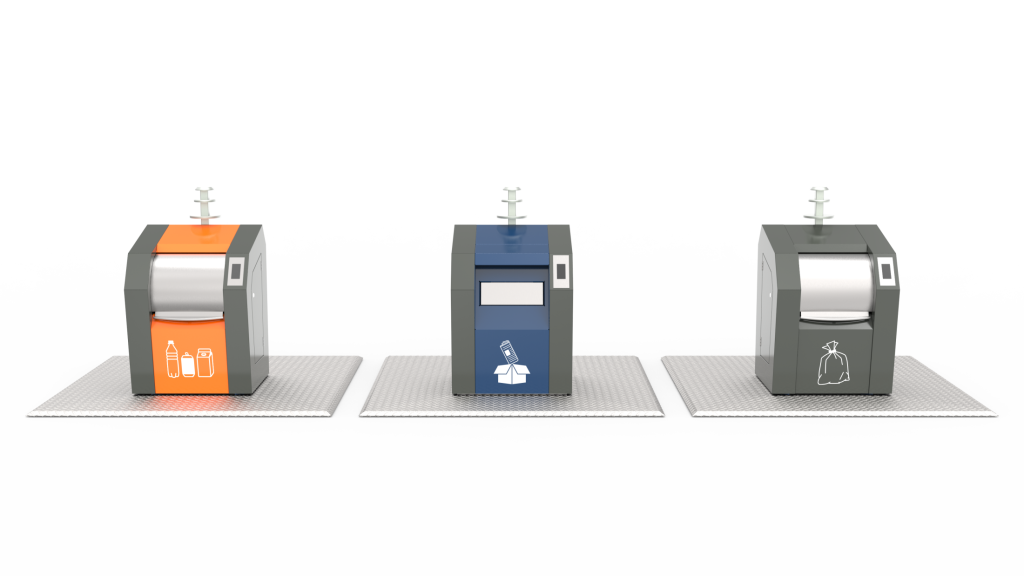
Sidcon has 3 types of compactors: for plastic packaging; for paper and cardboard; and for residual waste.
Fewer collections
Less material and staff required
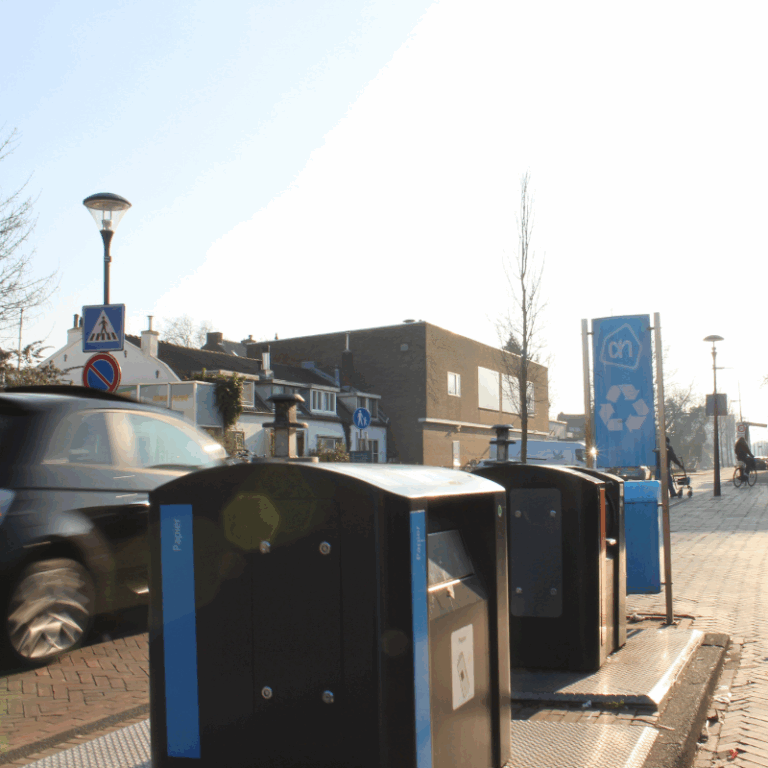
“In Heemstede, we installed our first underground paper compactor at a problem location. Previously, containers had to be emptied daily, and even twice on Saturdays.
This led to cardboard being left beside full containers and caused nuisance. Now, we only need to empty the container 2 to 3 times a week, with no collections required at weekends.”
“If we collected the waste from 750 households using conventional underground containers, we would need 30 of them. That’s simply not feasible in terms of space, nor is it desirable.
Using 2 underground compactors for general waste and 2 more for paper/cardboard, plus 1 other for recyclable plastic, going by the amount of waste involved, it’s possible to empty just once per week.”
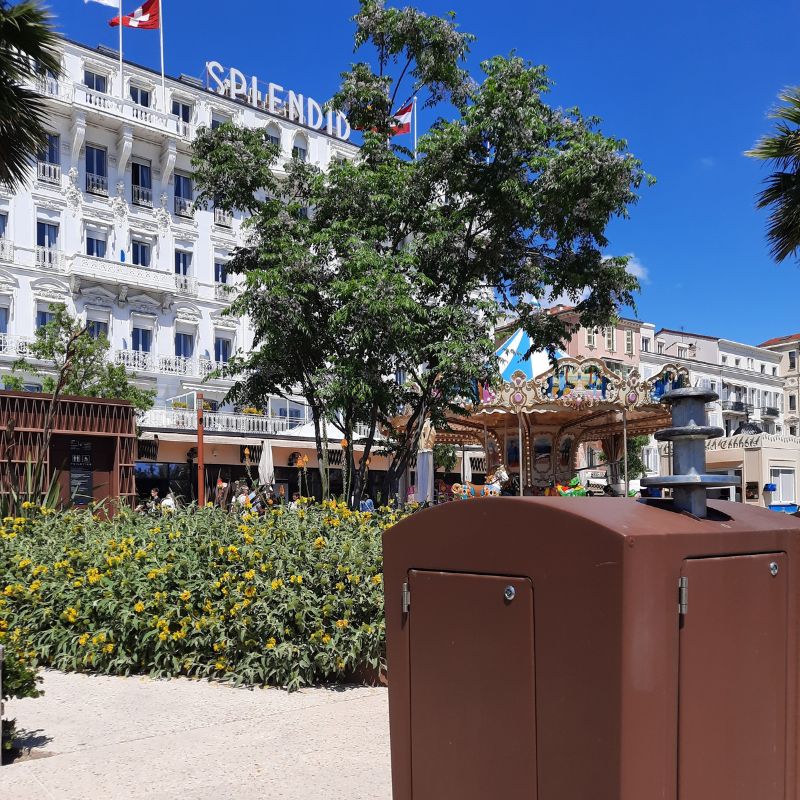
I am certain Cannes will be expanding use of the underground compactors in the future. The higher capacity provides us with big savings in collection costs and a smaller footprint helps clean up the appearance of the city.
I see major added value in installing Sidcon underground compactors in other French cities. Everyone is looking to save costs on waste collection and making their cities more attractive and clean. Sidcon’s underground compactor provides both of these benefits.”